
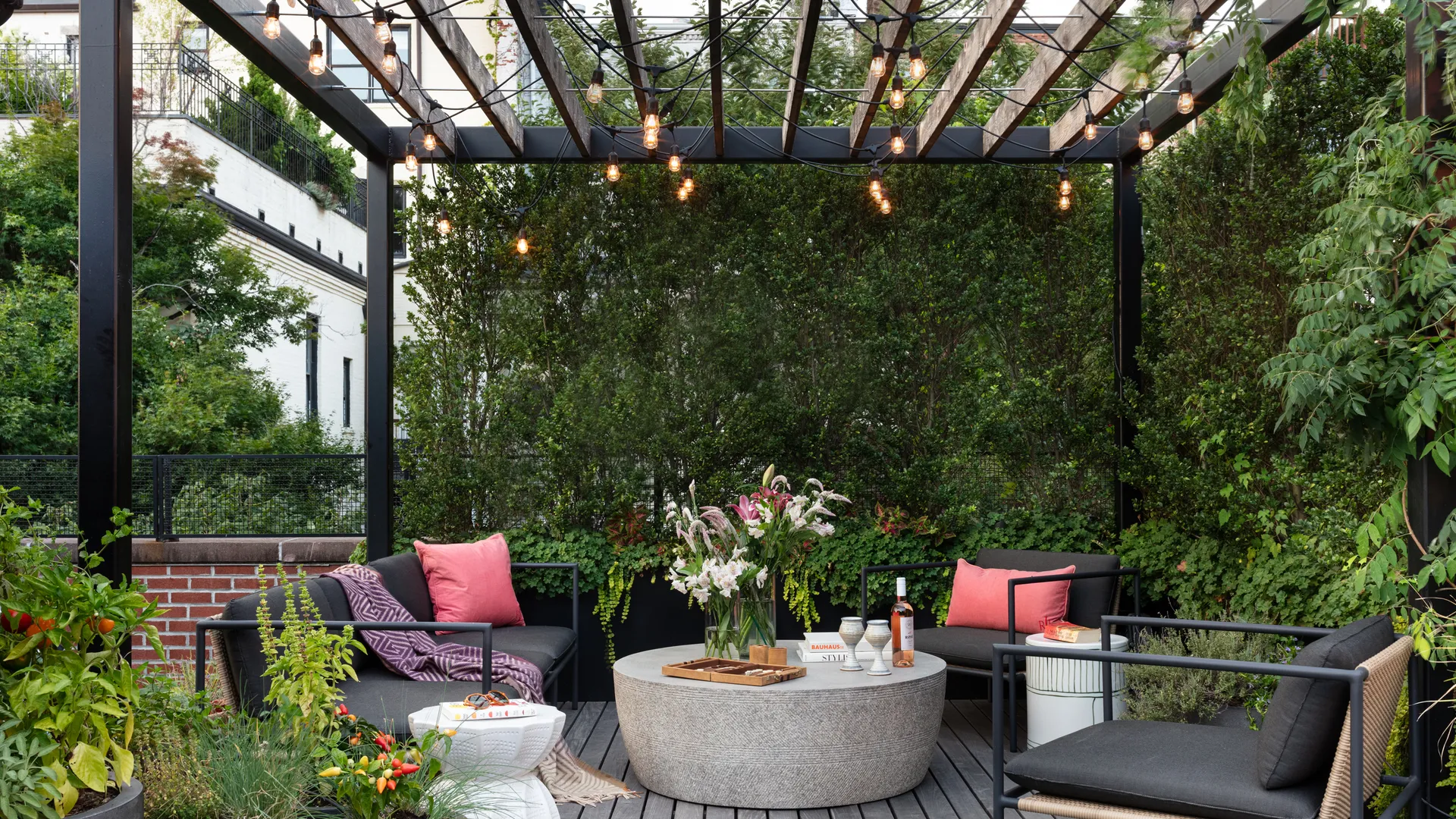
An outdoor reading corner works best when it feels separate from everyday backyard activity without becoming inconvenient to use. Shade, comfortable seating, manageable noise, and protection from damp ground matter more than elaborate decoration.
The goal is simple: create a place where staying for half an hour feels easier than going back inside.
Start With Reliable Shade
Reading in direct midday sun quickly becomes uncomfortable. A mature tree can provide natural cover, while pergolas, umbrellas, shade sails, and covered patios give more predictable protection.
Watch the location for a full day before arranging furniture. A corner shaded at breakfast may receive strong afternoon sunlight. Poolside gardens can offer useful backyard shade inspiration for balancing open air with sheltered seating.
Consider Moving Shade
Portable umbrellas or lightweight screens work well when the sun changes dramatically between seasons. They’re especially useful in smaller yards where one permanent structure would dominate the space.
Flexibility can be more valuable than building a large roof over a tiny reading area.
Choose Seating You Can Stay In
A chair that looks attractive isn’t automatically comfortable enough for reading. Good support, suitable seat depth, and a place to rest your arms matter during longer sessions.
Outdoor lounge chairs, deep armchairs, hanging chairs, or simple cushioned benches can all work. Cozy retreat-style outdoor spaces also show how texture and shelter can make small seating areas feel more inviting without filling them with furniture.
| Feature | Useful Choice | Why It Helps |
|---|---|---|
| Shade | Tree or umbrella | Reduces glare |
| Seat | Supportive chair | Improves comfort |
| Surface | Pavers or deck | Avoids damp ground |
| Table | Small side table | Holds books and drinks |
Reduce Noise and Visual Distraction
A reading corner doesn’t need complete silence, but it should sit away from the busiest part of the yard. Avoid placing it beside grills, children’s play equipment, pumps, or frequently used gates if quieter alternatives exist.
Planting can help soften the setting. Tall grasses, shrubs, bamboo in containers, and small trees can create visual separation while still allowing airflow.
Add Only the Accessories You Will Use
A small side table is usually more useful than a large collection of decorative furniture. It gives you somewhere to place a drink, reading glasses, phone, or second book.
Outdoor cushions, a weather-resistant storage basket, and soft lighting can extend comfort. Broader backyard property ideas can also help when the reading nook needs to fit alongside paths, patios, planting areas, and other household zones.
Keep enough open space around the chair to move naturally.
Where Reading Corners Can Fail
People often focus on appearance while overlooking glare, dampness, insects, and noise. A beautiful seat beneath heavy foliage may constantly collect leaves or bird debris, while a secluded corner beside standing water may become unpleasant during mosquito season.
Soft furnishings create another issue. Even outdoor-rated cushions last longer when they can dry properly or be stored during prolonged rain. Comfort should remain practical enough that using the space never feels like a chore.
Frequently Asked Questions
What is the best location for an outdoor reading nook?
Look for partial or full shade, limited foot traffic, comfortable airflow, and a stable dry surface. A location near greenery can feel secluded without requiring a large backyard.
How can I make an outdoor reading corner private?
Use shrubs, tall grasses, trellis panels, screens, planters, or a partial fence. Keep some openness so the area receives airflow and doesn’t feel boxed in.
Does an outdoor reading area need electricity?
No. Daytime spaces may need none at all. Rechargeable lamps, solar lighting, or battery-powered reading lights can provide evening illumination without installing permanent wiring.
Build Around Comfort First
Start with one good chair in the quietest shaded location you already have. Use the space for several days before adding screens, plants, tables, lighting, or decorative pieces.
The best reading corners often develop gradually because actual use reveals what is missing. Protect the spot from glare and dampness, keep distractions modest, and give yourself a seat that makes putting down the book harder than picking it up.