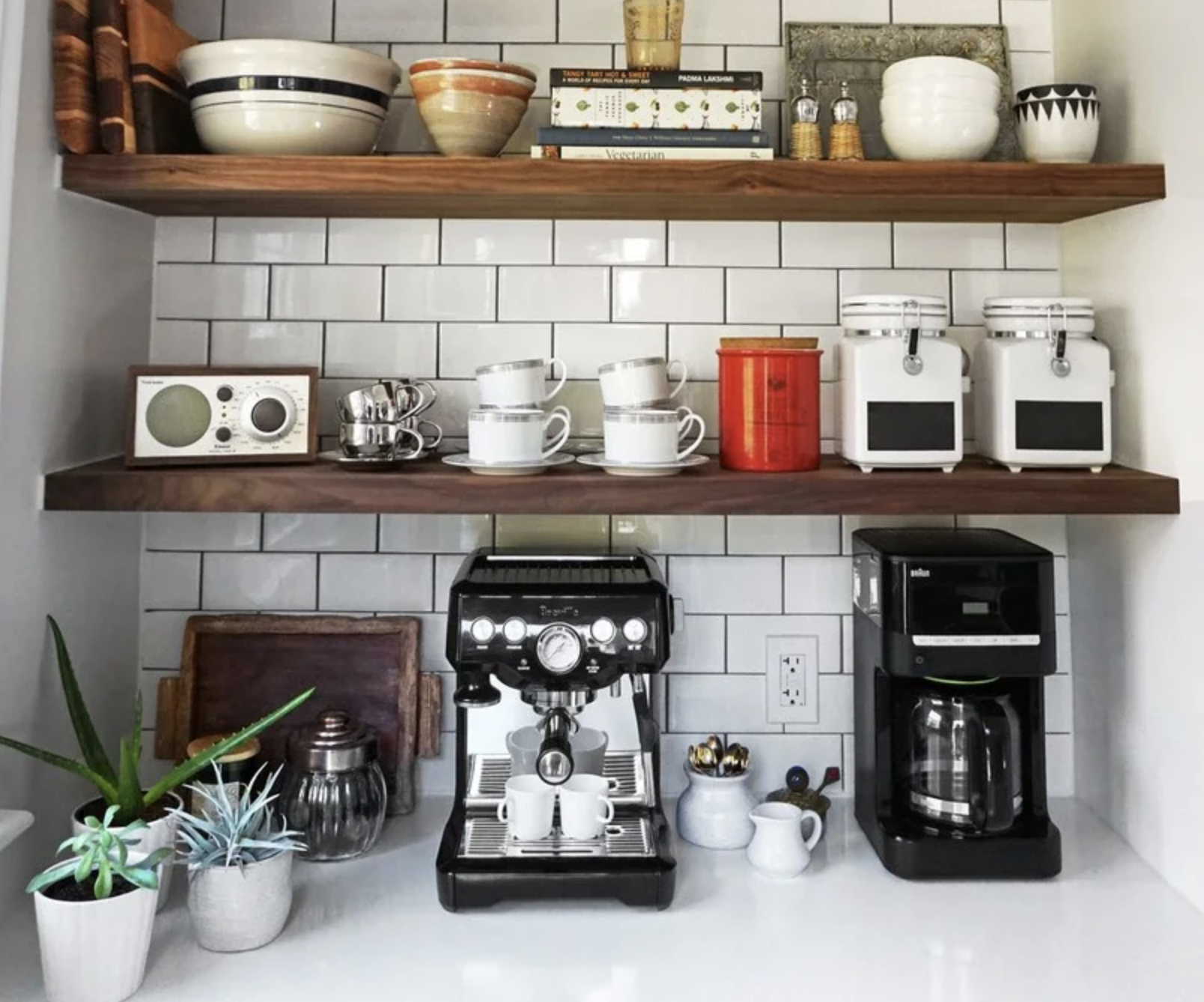
A coffee bar works best when everything needed for the first cup is arranged in a compact sequence: coffee, filters or pods, brewing equipment, mugs, and small extras. Good coffee bar storage isn’t about displaying every accessory. It is about removing the small delays that make a morning routine feel cluttered.
Even a narrow counter can work if vertical space and drawers are used carefully.
Organize Around the Brewing Method
Start with the machine or brewer you actually use. An espresso machine needs room for a grinder, tamper, beans, and perhaps a knock box. A pour-over setup needs filters, a kettle, a scale, and a dripper.
Keep the tools for your main brewing method closest to the machine. Secondary equipment can move to a cabinet instead of competing for prime counter space.
Ideas from interior organization features can be useful when you want the coffee zone to feel coordinated with the surrounding kitchen rather than like a collection of appliances.
Store Beans Away From Heat and Light
Coffee beans benefit from storage that limits exposure to air, moisture, heat, and strong light. That makes the cabinet above a hot appliance or a sunny windowsill less appealing than they first seem.
Keep only a sensible quantity beside the brewer. Bulk supplies can remain in a pantry so the coffee bar doesn’t become a storage warehouse.
| Coffee Item | Practical Location | Reason |
|---|---|---|
| Daily beans | Closed container nearby | Fast measuring |
| Mugs | Shelf or hooks | Easy reach |
| Filters | Drawer or covered bin | Keeps them clean |
| Extra supplies | Pantry or cabinet | Prevents clutter |
Use Vertical Space for Mugs
Mugs often consume more room than the brewer itself. A shallow shelf above the counter can hold everyday cups without taking preparation space away.
Hooks can work too, but avoid installing so many that the wall becomes crowded. Design inspiration from welcoming porch and home ideas may help when you want open shelving to feel warm rather than purely functional.
Separate Everyday and Occasional Mugs
Keep four or six frequently used mugs close to the machine and store oversized, seasonal, or sentimental cups somewhere else.
This simple split prevents the coffee bar from becoming a display cabinet for every mug you own.
Control Cords, Water, and Small Accessories
Coffee equipment introduces practical issues that decorative coffee-bar photos often ignore. Machines need outlets, kettles need safe cord placement, and water reservoirs need enough overhead clearance to refill.
Small items such as stirrers, teaspoons, sweeteners, and reusable filters can live in one drawer. Broader home organization concepts can provide inspiration for giving tiny items defined spaces without adding visual clutter.
Avoid routing cords across a sink or preparation path.
Where Coffee Bars Commonly Become Cluttered
The biggest problem is treating the station as both storage and decoration. Syrup bottles, signs, plants, mugs, jars, grinders, pod holders, and several brewers can quickly consume every usable inch.
Another mistake is storing supplies based on appearance rather than frequency. The item used twice each morning should not sit behind something used twice each month. A coffee bar should make brewing easier before it tries to look impressive.
Frequently Asked Questions
Should coffee mugs be stored upside down?
Either orientation can work. Upside-down storage may reduce dust entering the cup, but rims should rest on a clean, dry surface. Hanging mugs by their handles is another space-saving option.
Can a coffee bar fit in a small kitchen?
Yes. A narrow counter section, rolling cart, pantry shelf, or unused cabinet can support a compact setup. Limit the station to one primary brewing method and the supplies used most frequently.
Where should coffee syrups be stored?
Follow the manufacturer’s storage instructions. Many unopened products can remain in a cabinet, while some products may require refrigeration after opening. Keeping only regularly used flavors at the station saves space.
Design for the First Cup
A good coffee bar should reduce decisions early in the day. Place the brewer where it can stay safely plugged in, keep daily beans and mugs close, and move backup supplies elsewhere. Once the working sequence feels effortless, decorative touches can be added without sacrificing the function that made the station worthwhile.